Technology Deep Dive
B2B Ecommerce for Distributors: Getting Pricing, Catalog, and ERP to Agree
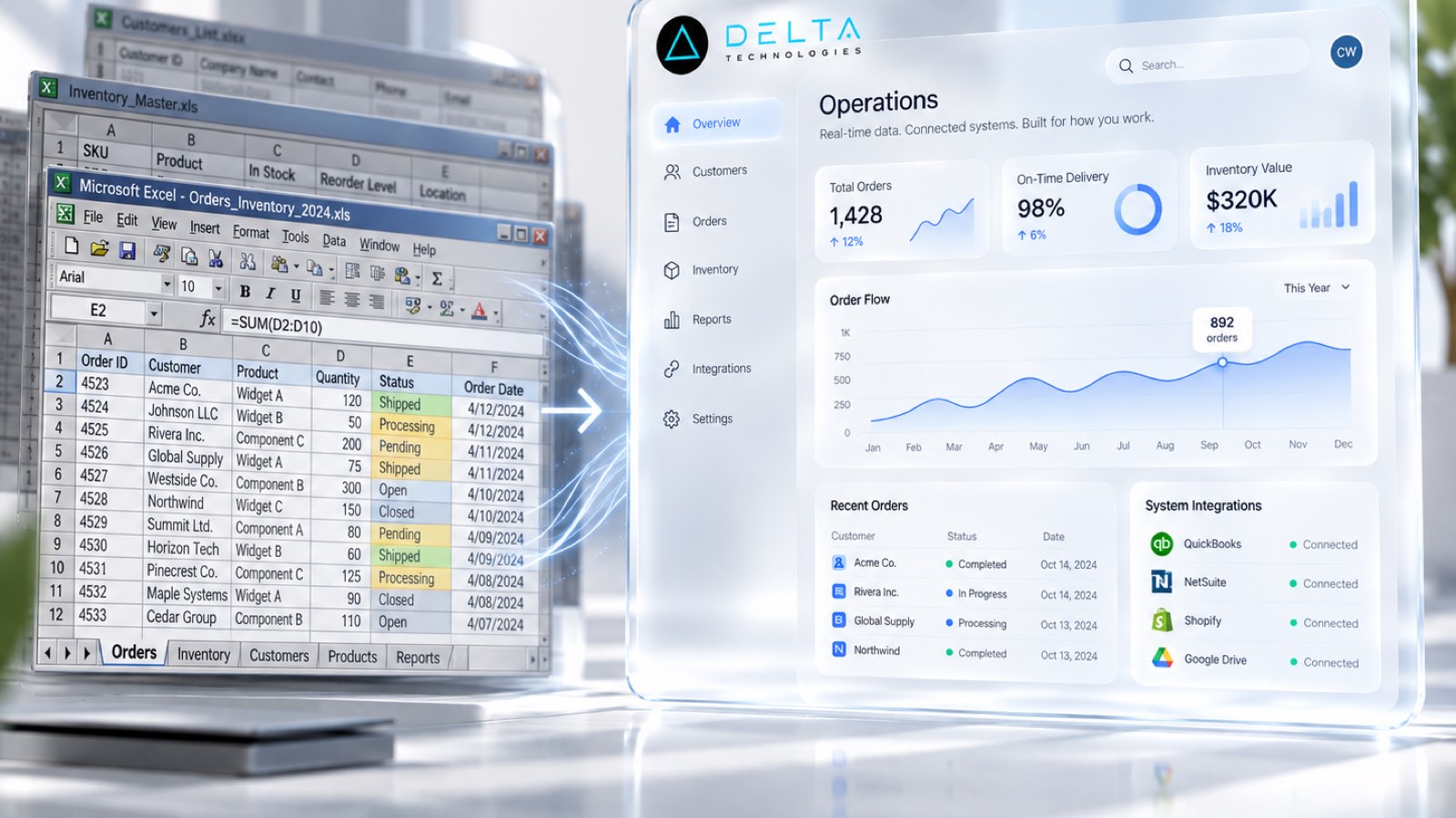
Your best customers already know their price. A good portal shows it to them, live, straight from the ERP.
The portal should never become a second source of truth for price or stock.
Your best customers already know their price. They just can't see it online.
Most distributors have a B2B portal or webstore of some kind. Many still take most orders by phone and email, because the site can't show what a buyer actually needs: their contract price, real availability, and the status of last week's order. When the site can't answer those questions, buyers call, and your inside sales team becomes a human lookup service.
This guide covers why B2B ecommerce is harder for distributors than for retailers, and a practical way to get pricing, catalog, and ERP data to agree.
Why Distributor Ecommerce Is Different
A retail storefront shows one price to everyone. A distributor's price depends on who is asking:
That logic usually lives in the ERP, along with inventory and credit. Off-the-shelf storefronts are built for the retail case, so distributors bolt on connectors that sync a few times a day, re-key web orders by hand, or leave pricing off the site entirely.
Scale makes it harder. In a published case study, an industrial MRO supplies distributor with 300,000 products and 130,000 active customer companies found its commerce platform lacked robust B2B functionality and struggled with complex customer-specific pricing. The custom platform built for it supports 9 billion pricing permutations.
Decide Where the Truth Lives
Before anyone designs a page, decide which system owns which fact:
The portal should never become a second source of truth for price or stock. When it does, the site and the ERP drift apart, and customers learn not to trust the site.
- Write Down Your Pricing Rules
- Clean the Catalog Before You Launch
- Sync in Real Time Where It Matters
- Design Around What Buyers Actually Do
- Make Supplier Onboarding Part of the Plan
Step 1: Write Down Your Pricing Rules
List every way a price can change: account, ship-to, quantity, product line, promotion, and contract dates. Note which rules are in the ERP and which live in a rep's spreadsheet or memory. The spreadsheet rules are the ones that break online ordering, so bring them into one rules table first, owned by one person.
Step 2: Clean the Catalog Before You Launch
A portal exposes every gap in your product data: missing images, inconsistent units, duplicate SKUs, and vague descriptions. Fix the data once, in one place, and let every channel read from it.
A published January 2026 case study about a heavy-machinery dealer is a good picture of the problem. Inventory and parts data were spread across systems with duplicate manual entry, and the listing sync between FileMaker and the website was costly and unreliable. The project consolidated the company's websites onto one platform and unified five Google Workspace accounts into one.
Step 3: Sync in Real Time Where It Matters
Not every field needs to sync every second. Price, availability, and order status do. Product descriptions can sync nightly. Decide the refresh rate field by field, and build alerts for when a sync fails, so nobody finds out from an angry customer.
Step 4: Design Around What Buyers Actually Do
B2B buyers rarely browse. They reorder, check a price, confirm stock, and look up an order or an invoice. Put those jobs on the first screen:
That last one matters more than it looks. In a published 2025 case study, an equipment distributor's website was losing leads to hard navigation, weak search, off-putting inquiry forms, and no alternatives for out-of-stock items. After the rebuild, the site was "averaging about 20-25 new leads each month."
Step 5: Make Supplier Onboarding Part of the Plan
Your catalog is only as current as your supplier data. If new suppliers and new items take weeks to load, the portal will always lag behind what you actually sell.
A published 2024 case study about a national food distributor reports lowering supplier onboarding time by 30% and describes a retailer digital platform at $2B per year and growing.
Keep Your Reps in the Loop
A portal should take the lookups off your inside sales team, not take the relationship away. Route large orders, new accounts, and pricing exceptions to the rep who owns the account. Show reps what their customers ordered online so they can follow up. The best portals make reps more useful, not less.
Common Mistakes
By the Numbers
Published industry case studies from software firms show where the time goes. The figures below are self-reported by the firms that published them, and each describes a single project rather than an industry average.
- 9 billionpricing permutations supported for an MRO distributor with 300,000 products
- 30%less supplier onboarding time at a national food distributor
- 20-25new leads a month after an equipment distributor's website rebuild
Self-reported results from case studies other software firms have published. See Sources & method below.
Where does your team sit? The 14-day Ops Efficiency audit measures it. Book the audit
Start With a Systems Review
If your portal is live but the phones are still ringing, the problem is usually the data underneath it, not the design on top.
A Systems Review maps where your pricing, catalog, and order data live, finds where they disagree, and gives you a ranked plan for what to connect first. See how we built one source of truth for a distributor in our unified operations platform case study, or explore our custom software services.
Sources & method
- Industrial distributor, B2B commerce platform — published case study (Codal, 2025)
- National food distributor, supply-chain platform — published case study (MadeLabs, 2024)
- Equipment distributor, website rebuild — published case study (The Kyle David Group, 2025)
- Heavy-machinery dealer, platform consolidation — published case study (LuminFire, 2026)
Figures are self-reported results from case studies other software firms have published. Delta did not produce these results. Where a source says “up to”, so do we.
FAQ
Frequently Asked Questions

Know a business that’s struggling to keep up with changing customer expectations?
Share this article.
Tell Us What You’re Seeing
How are customer expectations changing in your industry? Share your thoughts privately with Delta Insights.